“Catalogi tertii” of the Austrian Jesuit Province (1590–1770)
A database on the economic status of the domiciles and long-term, statistical analysis of the data
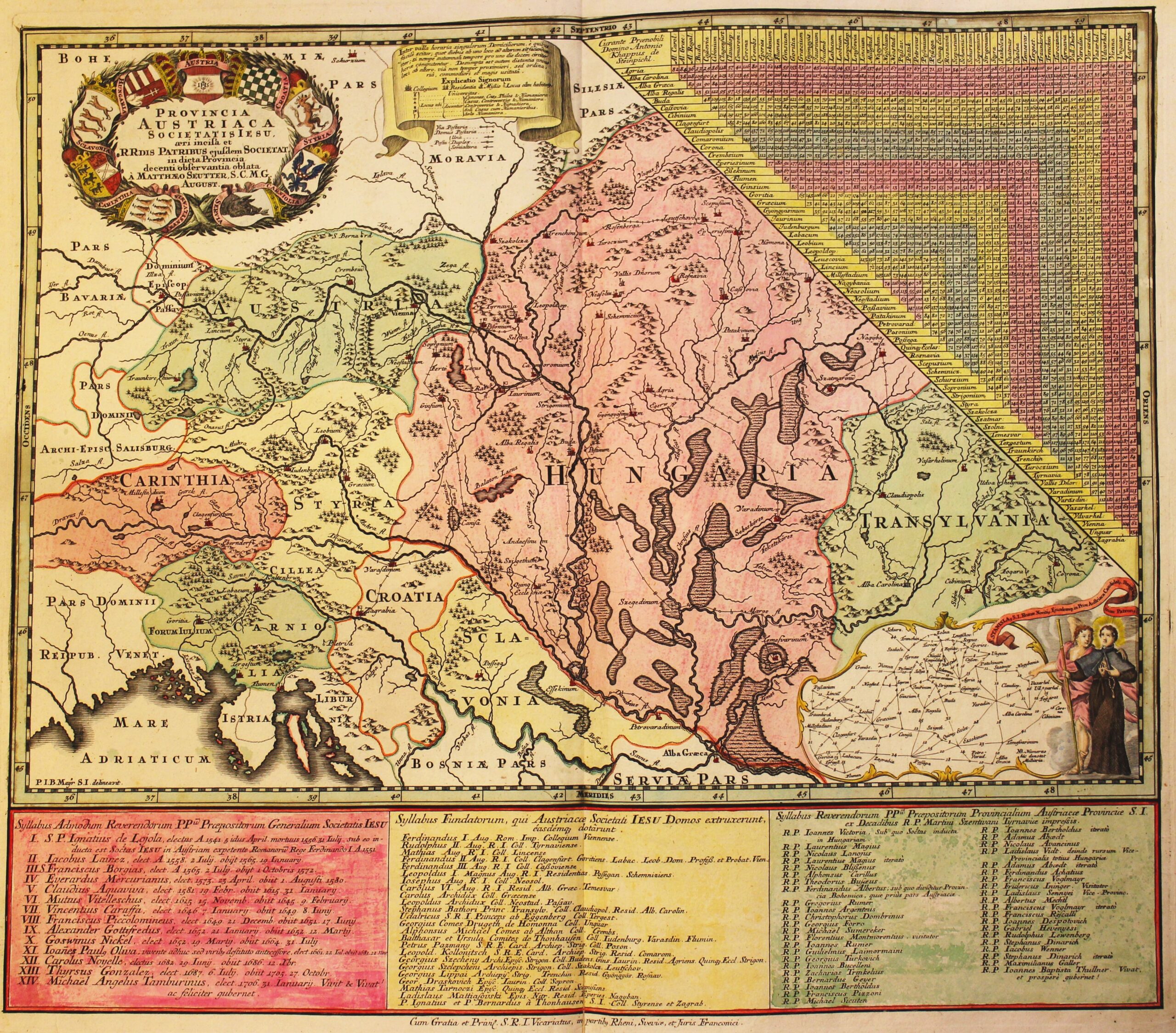
The economic governance of the Society of Jesus has so far remained on the periphery of Jesuit Studies and has not received focused attention. In fact, the provinces provided the fundamental institutional and financial governmental framework of the Society. In absence of a central economic directive from Rome, financial governance was only coordinated at the provincial level, while the individual colleges managed themselves independently, which increased the responsibility of the local economic leaders. At the same time, this did not mean that the central government of the Society was not informed about the economic conditions in the provinces. In fact, knowledge of the financial resources of the houses was necessary for the Society’s general and his advisers to make personnel and institutional decisions concerning the province, e.g. the foundation of new colleges. According to the practice of the Society, each province was obliged to report in detail to the Jesuit general on its members and its domiciles every three years, thus creating the so-called ‘catalogi triennales’. These triennial catalogues always consisted of three parts: the so-called ‘first’ catalogue contained the most important data of the Jesuit members of each house (name, length of ministry, professions, etc.), the ‘second’ catalogue, in the same order, provided sensitive information about the Jesuits (e.g. health, ability to serve in the Society, reliability, etc.), and the ‘third’ catalogue informed the general of the financial situation of each house.
The series of Austrian ‘catalogi triennales’ is preserved in a unique copy in the Jesuit archives in Rome, in almost 100 volumes (Archivum Romanum Societatis Iesu, Provincia Austriae, nr. 25–121). Within the framework of this project, we are processing only the economic reports, also the ‘third’ catalogues, since these differ from the other types of catalogues mentioned in both content and form. These catalogues consider the financial status of each domiciles (from 1590 to 1770), listed according to the following points: the regular income, the regular expenses, the remaining amount, the number of members who could be maintained, the number of members actually living in the house, the amount of loans taken out by the house, the sources and methods of repayment. Although this type of archival source is by no means unknown in the literature, its vast volume, richness of data and limited availability have so far prevented any analysis of its content.
This project is part of Zsófia Kádár’s postdoctoral research project, titled “Oeconomia Jesuitica: Jesuit financial management, economic governance and social networks in the Habsburg Monarchy, 1563–1773” (FWF ESP 475-G) carried out at the Institute of Austrian Historical Research at the University of Vienna from September 2023 to August 2027. This project is financing the extensive data entry phase.
The Jesuit Catalogs Database, developed by the Institute for Advanced Jesuit Studies and Boston College Digital Libraries in Boston, provides the IT-tools and infrastructure for recording data and preparing statistical analyses. The Archivum Romanum Societatis Iesu supports the project by making scanned copies of the original sources available to the research team. All of this opens a completely new perspective on the use and analysis of this unique, serial data source.
The database structure was developed by Alessandro Corsi, Thomas Dave, and Zsófia Kádár. Participants in data entry include Patricia Bigl, Dorottya Piroska Bajorné Székely, and Dmitry Zharov.